
Quantitative Fit Testing (QNFT) Guide: Requirements, Protocols & More
Quantitative Fit Testing is the most accurate form of respirator fit testing. It provides data-driven results that determine the fit of a respirator on an individual’s face. Proper fit testing saves lives.
Who Needs Quantitative Fit Testing?
Quantitative fit testing is common in many industries that deal with potentially hazardous chemicals or inhalants. In several industries, employers are required to conduct regular face fit testing. Whether it is required or not, anyone wearing a respirator (permanent or disposable) should be testing the fit of those respirators to ensure safe use. Here are a few examples of industries for which respirator fit testing is a must-have:

Government & Military

Healthcare

First Responders

Fit Testing Providers
Quantitative vs Qualitative Fit Testing
There are multiple ways to break down the differences between Qualitative fit testing and Quantitative fit testing. Quantitative is data-based, provides a real objective metric, and usually tests the actual mask individuals will wear to protect them. Qualitative is based on a series of sensory questions.
QuantitativeFit Testing
- Accurate and produces a defensible metric
- Positive results can’t be cheated by test subject
- Faster - less than 3 minutes
- Does not require hood and toxic challenge agent
- Verification check provides defensible proof of instrument performance
QualitativeFit Testing
- Not accurate – completely subjective
- Test subject can report inaccurate response
- Slower - each OSHA-compliant fit test takes about 23 minutes
- Claustrophobic environment and requires use of potentially carcinogenic challenge agents
- Results are not verified, leaving no defensible verification
Quantitative Fit Testing Methods Approved by OSHA
Quantitative Fit Testing can be defined as using fit testing equipment to measure the leakage around the face seal of a respirator facepiece to calculate a “fit factor”. A fit factor is essentially the ratio of the concentration of a challenge agent in the ambient air divided by the concentration of the challenge agent in the breathing zone. A Fit Factor of 100 is required for half-face respirators and a minimum fit factor of 500 for a full-face respirator (29CFR 1910.134).
Ambient Aerosol
This method uses as a challenge agent the naturally-occurring ultrafine particulates in the ambient atmosphere. (Advances in HVAC technology have in many instances reduced the ambient concentration of these particulates to a level that requires the generation of extra particulates to have a sufficient concentration for testing.) The concentration of the ultrafine particulates is sampled in the respirator via a sample adapter which enables the instrument to collect a breathing zone sample while the test subject performs a series of movements that are designed to stress the seal. This concentration is compared to the ambient particulate concentration. The instrument uses a technique known as Condensation Nuclei Counting (CNC) to size-enhance and count the particulates.Controlled Negative Pressure
As an alternative to aerosol fit test methods, this method creates a slight negative pressure inside the temporarily sealed respirator facepiece and then maintains a constant negative pressure for several seconds. The measurement of the exhaust stream that is required to hold the pressure in the temporarily sealed respirator constant yields a direct measure of leakage air flow into the respirator. The major disadvantage of the CNP method is that it does not allow the test to be performed in a dynamic manner, i.e., the test subject must remain completely still while the leakdown is measured. Thus, the respirator fit is not checked while the test subject is moving and breathing as would occur in normal workplace activities.Generated Aerosol
Using a high concentration of an aerosol introduced into a booth or test chamber, a photometer-based aerosol detector measures the challenge agent that leaks into the facepiece. This was the original method developed at Los Alamos, but with the development of the CNC instruments and the extensive infrastructure required to support this method, it is becoming extremely rare.
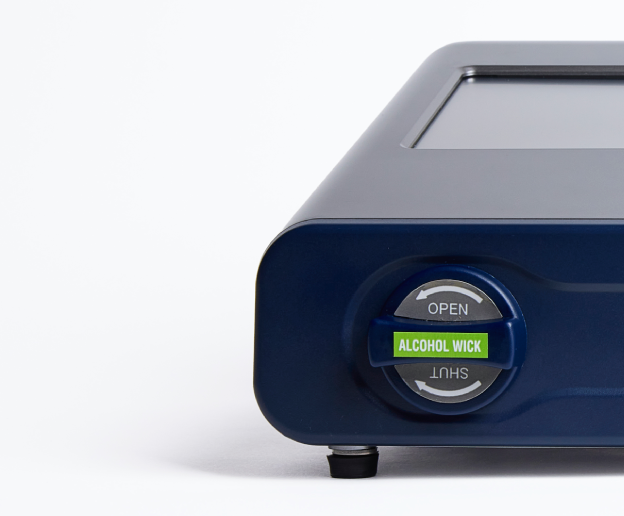
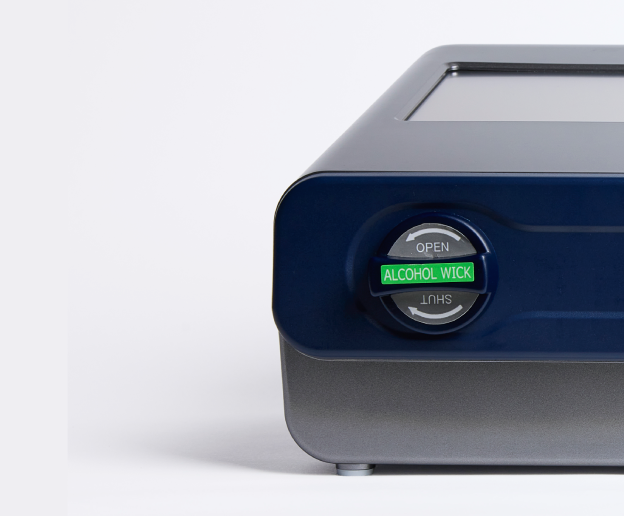
Quantitative Fit Testing Solutions


Types of Qualitative Testing Methods Set by OSHA
This can best be defined as a pass/fail test measuring a subject’s ability to detect any leakage of gas into the respirator based on taste, smell or reaction to an irritant by the user. Using OHSA’s approved methods of testing, the user should be able to do the following without reaction; breathing normally, breathing deeply, turning head from side to side, moving head up and down as well as talking. This testing applies to half-mask respirators such as N95 face masks.Due to the fact that qualitative fit tests cannot be considered equivalent to quantitative methods, and because full-face respirators require a true minimum fit factor of 500, the qualitative methods cannot be used for full-face respirators.
Isoamyl Acetate Screening
Odor threshold screening, performed without wearing a respirator, is intended to determine if the individual tested can detect the odor of isoamyl acetate at low levels (banana smell).Saccharin Solution Aerosol Screening
Taste threshold screening, performed without wearing a respirator, is intended to determine whether the individual being tested can detect the taste of saccharin (sweet tasting).Bitrex (Denatonium benzoate) Screening
Taste threshold screening, performed without wearing a respirator, is intended to determine whether the individual being tested can detect the taste of Bitrex (bitter taste).Irritant Smoke (Stannic Chloride)
Test uses a person’s response to the irritating chemicals release in the “smoke” produced by a stannic chloride ventilation smoke tube to detect leakage into the respirator of the irritant smoke.
Face Fit Testing Key Terms
Respirator Fit Test
A test that checks whether or not a respirator properly fits and seals against the face of the user.
Qualitative Fit Test
A method of testing that utilizes the wearer’s reactions to substances to test the fit of a respirator mask.
Quantitative Fit Test
A method of testing that utilizes specialized equipment to measurably test the amount of leakage around the seal.
Isoamyl Acetate
A banana-smelling substance used to test elastomeric masks.
Saccharin
An aerosol perceived as sweet that’s used to test elastomeric and filtering respirators.
Denatonium
A substance that is mixed with water and sprayed to detect gaps in fit. It has a bitter taste.
Irritant Smoke
A smoke that causes irritation and discomfort.
FAQ
What is a Quantitative Fit Test?
A completely objective test that provides defensible metrics, automatically capturing results into a secure database — no subjective reporting needed.What is Fit Testing Required For?
29 CFR 1910.134 is the law that describes in detail why fit testing must be performed and who must be tested. Briefly, any worker who is exposed to a respiratory insult and who is required to wear a respiratory protective device (respirator) must be fit-tested before wearing the respirator in the performance of his or her duties.What does Qualitative Fit Testing Assess?
In reality, Qualitative Fit Testing assesses only the test subjects’ ability to sense the challenge agent and his or her truthfulness.How Often Should Testing Be Done?
Fit testing must be performed annually per 29 CFR 1910.134.Is Fit Testing Mandatory?
Yes. 29 CFR 1910.134 requires fit testing for any worker required to wear a respirator.How Long is Fit Testing Valid?
A fit test is valid for one year before another needs to be performed.Is Fit Testing a Legal Requirement?
29 CFR 1910.134 states that a written, formal Respiratory Protection Program (RPP) be established in any organization where respiratory protection is required. Although the requirements for training of personnel administering the fit tests are somewhat vague, the implication is that the Administrator of the RPP is responsible for the criteria for training the person who actually conducts the fit tests. Please refer to this Cornell University piece.
Need help picking the best method?
Our team can help you evaluate method options and set up a program that stays compliant and efficient.
Contact Us